
Construction Loans Australia
Building a new home requires a different loan structure — funds released in stages, interest charged only on what's drawn. We match you to lenders who specialise in construction and manage the process from slab to handover.
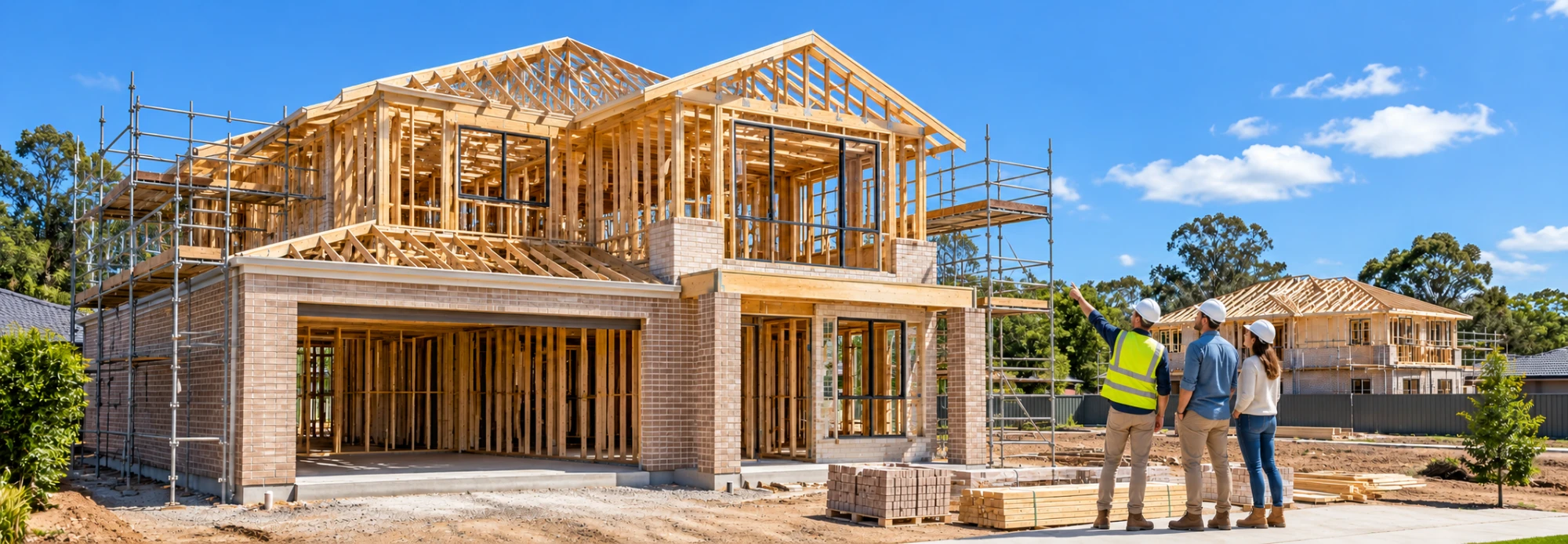
Find the right construction loan for your project
Every build is different. Here's how we help across the most common construction lending scenarios in Australia.
New Home Builder
Building from the ground up on vacant land is the most common construction scenario. We help you understand the land-and-construction loan structure, what documents your builder needs to provide, and which lenders work best with your chosen builder.
Knockdown Rebuild
Knocking down your existing home and rebuilding gives you full design control without moving suburb. Your land equity can serve as part of the deposit, reducing or eliminating cash required upfront. We model the numbers before you start.
First Home Builder
First home buyers building a new home may be eligible for the First Home Owner Grant — which is often higher for new builds than established properties. We confirm your eligibility, find a lender who works with your builder, and guide you through the whole process.
Investment Property Builder
Building an investment property allows you to claim depreciation on the full structure from day one. We structure the construction loan for investment purposes and help you find lenders who assess rental income accurately during and after the build.
Dual Occupancy Builder
Building a dual occupancy — main dwelling plus granny flat — adds rental income and property value. Not all lenders approve dual occ construction loans. We identify lenders who actively write these, model the income impact, and structure the lending accordingly.
Major Renovator
Major structural extensions or renovations may qualify for construction loan funding if a licensed builder is engaged. We help you determine whether your project qualifies, what a lender requires, and which product fits your renovation timeline.
Why use a broker for a construction loan?
Construction loans are more complex than standard home loans — progress payments, builder requirements and drawdown coordination require specialist knowledge.
Types of construction loans available
The right product depends on whether you're buying land first, already own it, or managing the build yourself.
Funds released in 5 stages as your build progresses. Interest charged only on the amount drawn at each stage — not the full approved loan — keeping repayments low during construction. Converts to standard P&I loan at completion.
Combines the land purchase and construction into a single loan facility. Land is drawn first; construction funds drawn progressively as the build stages are met. Available for both owner-occupier and investment builds.
For eligible owner-builders managing their own construction. Fewer lenders offer these, maximum LVRs are more conservative, and an owner-builder permit is required. A broker identifies which lenders will actively consider your project.
How it works
From your first conversation to handover — here's what to expect.
Share your build plans and financial position
Tell us about your land, builder, estimated build cost and deposit position. If you're still in the planning stage — that's fine. We can model numbers before you've signed a contract.
We match you to the right lender for your builder and build type
We compare lenders who actively write construction loans, check that your builder meets lender requirements, and identify the most competitive rate and structure for your project.
We manage the drawdown process from slab to handover
Once your construction loan is approved, we help coordinate drawdown requests as each stage is completed — so your builder gets paid on time and the build stays on schedule.
Ready to explore construction finance?
Takes 5 minutes. No obligation. We compare lenders who specialise in your build type.
Frequently asked questions
Common questions about construction loans in Australia.
How does a construction loan work in Australia?
A construction loan releases funds progressively as your build reaches key milestones rather than as a single lump sum. You pay interest only on the amount drawn at each stage, which keeps repayments lower during construction. Most lenders require a fixed-price building contract with a licensed builder, plus council-approved plans before any funds are released. Once construction is complete, the loan typically converts to a standard principal and interest home loan.
What is a progress payment and how many are there?
Progress payments (also called drawdowns) are funds released by the lender to your builder at set stages of construction. There are typically five standard stages: deposit/slab, frame, lock-up, fixing, and practical completion. Each stage requires an inspection or invoice from the builder before the lender releases payment. Your broker helps coordinate the drawdown process so payments align with the builder's schedule and the lender's requirements.
What deposit do I need for a construction loan?
Most lenders require a minimum 5–20% deposit for a construction loan, based on the total completed value of the property (land plus build cost). If your deposit is below 20%, Lenders Mortgage Insurance (LMI) typically applies. The lender will order an 'on completion' valuation to determine the property's end value, which affects how much they will lend. First home buyers may also be eligible for the First Home Owner Grant, which can contribute to the deposit.
Can I get a construction loan if I already own the land?
Yes — if you already own land, you can use its equity as part of your deposit for a construction loan. The lender will assess the land value plus the estimated completed build value to determine your LVR. Depending on how much equity you have in the land, you may need little or no additional cash deposit. A broker can model the numbers based on your land value, proposed build cost and income before you approach lenders.
What happens to my construction loan when the build is complete?
At practical completion (when the builder issues a certificate of occupancy or handover), your construction loan automatically converts to a standard home loan. Repayments switch from interest-only on drawn funds to principal and interest on the full loan balance. At this point you can review your loan structure, rate and features with your broker — it is a good opportunity to compare lenders and potentially refinance if a better deal is available.
Related lending options
K&M Capital resources
Official resources
Information on this page is general in nature and has been prepared without taking into account your objectives, financial situation or needs. It does not constitute credit advice, financial advice, loan approval or a loan offer. Any lending outcome is subject to lender assessment, eligibility, verification, credit criteria, responsible lending obligations and final approval. K&M Capital may assist borrowers by collecting enquiry information, helping prepare lending scenarios and connecting borrowers with brokers, lenders, service providers or referral partners where appropriate. K&M Solutions and Services Pty Ltd (ACN 649 305 126) does not hold an Australian Credit Licence.